Wednesday, July 20, 2011

Kinder Garden Harvest

Volunteers from Starbucks Philippines and MFI Foundation joined the Mano Amiga Kindergarten class in harvesting the first fruits, vegetables rather, of the Mano Amiga Vegetable Garden. Starbucks CSR head Zarah Perez shares some excerpts from her journal entry on what happened during the activity:

District Manager Jovie Bonifacio and her magic wand gets us started with introductions. Our friend here wants to be 'matalino' when she grows up.

I meet Mark and I tell him that one of my best-est of friends is named Mark too. This young Mark aspires to be the school principal someday.

In the other classroom, MFI Foundation's Rita is with the Mano Amiga moms carrying on about taking care of their other child - the Mano Amiga kinder gardens. Thanks to MFI for teaching us how to nurture veggie friends along with their worms and insects.

Time to harvest those veggies!

Helping that little herb breathe by taking those nasty weeds out.

Mano Amiga's Lynn and Jam both proud and happy with their achievement.

All of us working intently on our stations.

Break Time! Red velvet cupcakes; available only for our special Mano Amiga kids.

It seemed to be over too soon. Thanks to my colleagues at Starbucks in the Asia Pacific and Seattle offices for letting us grow; vegetables, friendships and more of ourselves.

Sunday, July 3, 2011

A School for All

The following article, reprinted with permission from The Philippine Daily Inquirer, tells the story behind the first Mano Amiga school in the Philippines, the different challenges it faces, and the fulfillment that comes with helping marginalized children transform their lives and achieve their dreams and aspirations.
***

A School for All by Vicky Herrera

Philippine Daily Inquirer
First Posted: July 2, 2011

When you ponder the question, “What do you do?”—you’ll be surprised where it can lead you to.

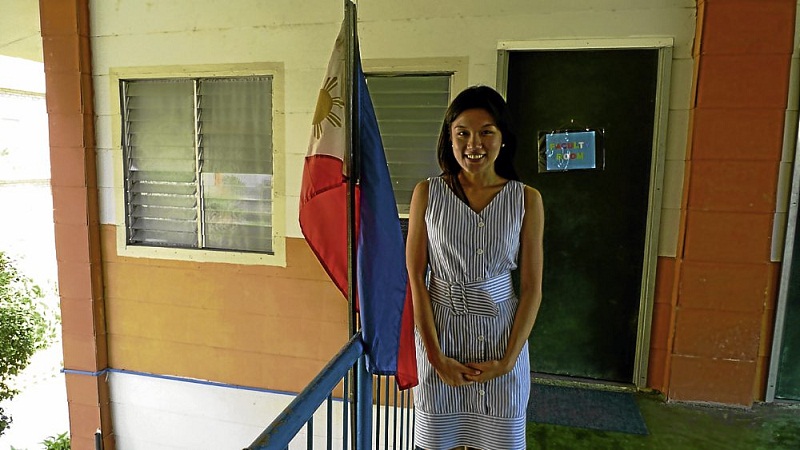
I met an energetic, friendly 26-year-old girl named Lynn Pinugu. She runs a nonprofit school. I already found this interesting, but learning more about her opened up a whole new world for me.

Pinugu moved to Mexico to work as an international youth volunteer in 2006. Part of her work was to go to schools to encourage high school students to volunteer for social action programs. Her story began when she walked into the Mano Amiga Guanajuato school.

“I was surprised when I found out the students only paid a symbolic amount for their tuition, because the campus had spacious grounds and up-to-date learning facilities,” she said of the school set up by a nonprofit organization to provide quality education in places like Argentina, Brazil, Chile, Colombia, El Salvador, Mexico and Venezuela.

“I was immediately impressed by the students’ self-confidence, good communication skills and enthusiastic participation,” she said.

According to Pinugu, what made a profound impression on her was the students’ genuine desire to serve others. “Many of them voiced out how they consider themselves more fortunate than other children because they were given an opportunity to study and they would like to share their blessings by joining a volunteer program.”

From Mexico to Manila

Before she left for Manila, Pinugu told the program director to give her a call if they considered Manila as one of their future development sights.

Little did she know that the conversation with the program director would alter the course of her life. The Altius Foundation, which operates the schools in Latin America, asked Pinugu to pioneer the school system in the Philippines.

Pinugu was 23 then, and the responsibility she inherited was enormous. For starters, she had to convince a group of investors to trust a young girl in her early 20s with their money.

Armed with her vision and her slides, Lynn pursued as many people as she could to get the school started. “All I could show potential donors was a Power Point presentation on the success of Mano Amiga schools in other countries, and the promise we will do our very best to achieve the same results here,” she said of how she started the small campus in Taguig City.

“I will always be grateful to the different individuals and organizations who supported us during the first few months. They took a leap of faith by supporting the school,” she stated.

From a class of 35 students in kindergarten to 90 students this June, the school is growing slowly, but steadily. “We can still remember how the school only had a makeshift bathroom for the first three days and everyone really watched their food and liquid intake,” she recalled.

Volunteer-inspired progress

Volunteerism played a big role in the development of the school. Through the volunteers who donate their time, resources and knowledge, Mano Amiga has been able to offer student enrichment programs, free medical services, skills and training seminars, and parenting classes.

Programs can range from ballet to football classes, as well. In fact, a few of their students received a scholarship from the ballet school because of their amazing potential.

A lot of the volunteers are also young advocates. Doing everything from painting the walls to playing with the kids, the volunteers are energetic and excited to be there. “I constantly experience first-hand how our youth volunteers could be so effective in empowering our students, who are simply starving for good role models to look up to,” Pinugu shared.

She added: “Interaction with youth volunteers improves the students’ social skills, builds their confidence and motivates them to have higher aspirations. What is just an afternoon or a day for a volunteer has a lasting impact on a child, who receives the inspiration he needs to thrive in life.”

This year, the volunteers got even younger. There were groups of 8-year-old girls who made bookmarks and sold it to relatives and neighbors to help earn money for scholarships. To raise more funds, a group of fourth graders conducted a bake sale and car wash to buy armchairs for the school. This proves you are never too young for volunteerism.

Community building

Each year the Mano Amiga staff and volunteers conduct house visits, where they spend time getting to know the family of each student.

“We cannot understand the circumstance of a student without understanding his situation at home,” Pinugu shared. “We also recognize that parents are the primary teachers of their children, and that the school cannot fully accomplish its mission without the parents’ cooperation.”

The school makes sure they keep all levels of communication open with the parents with dialogues and parenting seminars. Pinugu encourages families to participate in the development services offered by the school. After all, it is important that a peaceful home environment supports what one learns in school.

Pinugu understands the misconceptions regarding charity work. “For me, the biggest mistake a person can make when it comes to working with marginalized communities is to give them everything they need without asking them to do their part.”

She was inspired by the idea of teaching a person how to fish, instead of giving them fish. “We discourage the dole-out mentality in Mano Amiga because it’s not going to be good for the families in the long run.”

Learning from students

After working so long with the kids, Pinugu shared how she, too, is learning a lot from them. “It’s their generosity toward others, despite having so little. Sometimes we get so caught up in the consumerism mentality, and we’re always fixated on what we can have. These children constantly remind me of my responsibility to use whatever resources or talents I have to improve someone else’s life.”

The students also teach Pinugu about life’s simple joys. “I think it’s really beautiful how the children never take anything for granted,” she says.

“One time, about nine kids visited me in the office. They got so excited when they saw the swivel chair. For an hour, the children just took turns spinning around. They found it magical!

Friday, June 10, 2011

Three promising students receive Ballet scholarships


When asked what he wanted to be when he grows up, Mano Amiga Grade 2 student Joshua Dave Waras answered without missing a beat,"I want to be a pilot so I can go to France." Expecting to hear a more commonly known country like USA, the teacher asked him why he chose France of all the possible countries. Joshua Dave replied with a big smile, "Because I learned the French folk dance for the ballet recital."

Joshua Dave, along with fellow Grade 2 students Jazailah Cababat and Camille Rosales, received a dance scholarship to participate in Dance Basics' 2011 Summer Recital. Entitled "Around the World", the recital featured dances from different countries: Spain, Japan, India, Ireland, Africa, Morocco and the Philippines. Also showcased are dances that originated from the founding countries of ballet: Italy, France, Russia and the United States of America. Apart from the three Mano Amiga scholars, 48 other students joined the recital.

The Dance Basics teachers chose the three students after seeing the children's potential during the free ballet classes being held bi-monthly in Mano Amiga Academy. The vision of Dance Basics is to create a venue for young dancers to learn the fundamentals of Ballet, share the love of dance and cultivate appreciation for music and culture. They partnered with Mano Amiga because they wanted to extend the same opportunity to underprivileged children.

The Dance Basics team hopes to keep training promising students from the community with the hope that it will broaden their horizons, and open educational and career opportunities for them. Learn more about Dance Basics at http://dancebasics.wordpress.com/

Quality Parent Education


Coach Pia Acevedo and The OneCORE Success Center recently visited Mano Amiga Academy to give a skills-building session to the parents of the school year 2011-2012 scholars.

Bayani Para Sa Sarili teaches participants to take care of themselves in order to handle difficult concerns at home and better take care of their families.

"Parenting classes are a crucial aspect of the Mano Amiga program because we strongly believe that the likelihood of a child's success in school and later on in life, is largely affected by his home environment," Development Director Lynn Pinugu said. "Every year, we look for partner organizations and individuals who will help us form the parents in creating a nurturing and encouraging home environment."

The seminar was made possible with the help of Mano Amiga volunteer Vicky Herrera, who used her birthday celebration to raise funds to cover the costs of the activity.

The OneCORE success center is focused on providing guidance and personal development through programs that are tailored to an individual's specific life stage. Its CEO, Coach Pia Acevedo has over 17 years of experience in the field. She received her degree in AB Philosophy from Ateneo de Manila University and proceeded to do further studies in Coaching and Mentoring abroad and graduate studies on Family Ministries from the same university.
For more inquiries about services of The OneCore Success Center and Coach Pia Acevedo, visit: http://www.theonecore.com/main/

Thursday, April 28, 2011

Reliving School Year 2010-2011


As classes come to a close, we take a last look at some of the key moments that marked Mano Amiga’s 2010-2011 school year. It was certainly a year of firsts, which began with the announcement of Ms. Rev Tria-Siasoyco as the new Principal as well as the opening of Mano Amiga’s first social enterprise.

Here’s a look at some of the milestones Mano Amiga Academy achieved over the year:

  1. Healthy body, healthy mind: Bistro 3846, Mano Amiga's first social enterprise, delivers a unique, novel, and nurturing cafeteria experience in Everest Academy International school, where it serves healthy, age-appropriate lunch meals to the students. 100% of the profit is donated to the Mano Amiga scholarship fund and 90% of the staff comes from parents of the Mano Amiga scholars. Bistro is headed by Cordon Bleu London graduate and Everest parent Chef Amelia Ann Alba.
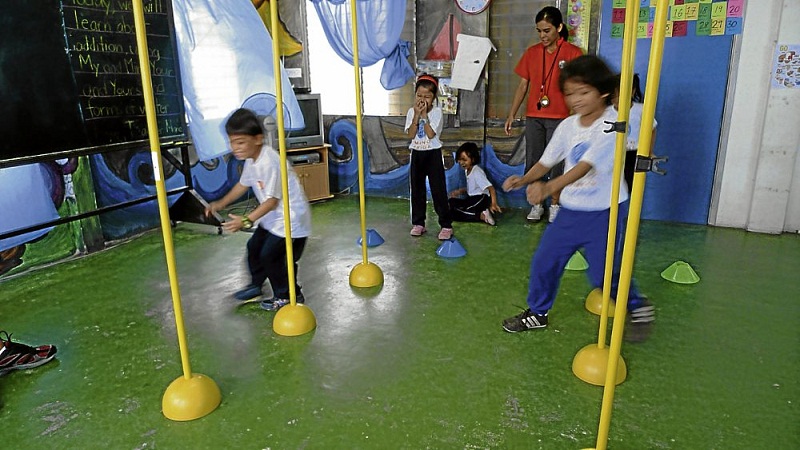
  2. Enriching school events: There's a very good reason why Mano Amiga students hardly get excited about summer vacation. Their teachers always make sure to give the students a fun, learning experience. Lessons in the classroom are supplemented by fun school activities that aim to increase the children's realm of experience and give free reign to their imagination. Events that were held during the year include English Month, Buwan ng Wika, UN Day, Christmas Play, and Quiz Bee.
  3. Livelihood Program: Lovingly made by hand by the Mano Amiga mothers, the Jesse Tree is an Advent Preparation kit that consists of a handpainted tree, a set of handcrafted ornaments and a booklet of readings and daily reflection. Christmas 2010 was the Jesse Tree's second year in the market and it garnered attention for its uniqueness and profound message. The Jesse Tree was one of the highlighted products in the DTI Christmas bazaar, and was featured in several newspapers and television shows.
  4. Community Development activities: According to an African Proverb, "It takes a village to raise a child." Mano Amiga works closely with the families to help build a community that would support the positive development of the children. The school offered free development services all throughout the year to the students, their families, and other families living in the community. These are services that seek to address their physical, spiritual and emotional needs. The programs include free Medical and Dental services, Parenting classes, Back to school program for Adults, English classes and skills development, values formation seminars and spiritual talks.
  5. Football Fridays and Ballet Saturdays: Children who come from low-income families rarely have the opportunity to explore and pursue their interest in arts and sports. Thanks to Futbol Funatics and Dance Basics who graciously volunteered their time in the school, Mano Amiga students were able to take Football and Ballet lessons for free.
  6. Veggie Tales: 100 Starbucks partners volunteered their time and planted a vegetable garden in the Mano Amiga schoolyard. The vegetable garden project aims to develop the children’s knowledge of living things, foster greater appreciation and love for their surroundings, and instill a responsible attitude towards the environment. The garden will also help generate income for the families since the produce will be harvested by the Mano Amiga parents and will be sold to Bistro 3846.
  7. Amazing Field trips: Field trips are always considered by children as the highlight of the school year. For teachers, field trips are important because it enables that students to connect abstract concepts learned in class to real-world experiences. For School year 2010-2011, Mano Amiga students met real life NASA astronauts, roamed around an amusement park for a day, and watched a movie in the big screen for the first time.